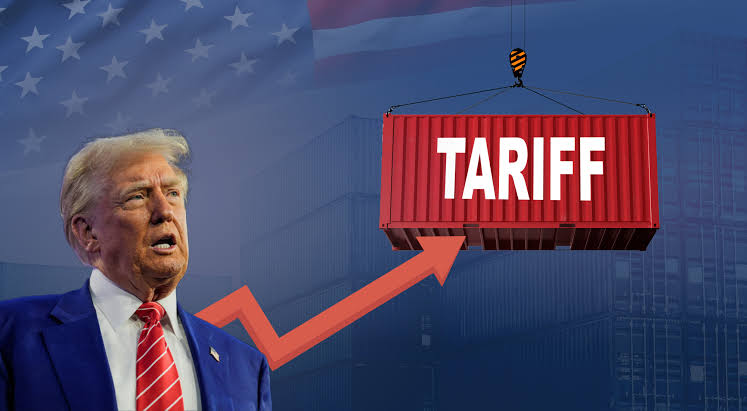
The Office of the United States Trade Representative (USTR) closed out one of the more unusual tariff campaigns of Donald Trump’s second term. Acting on the President’s direction under Sections 301 and 304 of the Trade Act of 1974, the USTR issued a Final Action Federal Register Notice imposing fresh duties of either 10 percent or 12.5 percent on virtually all goods entering the United States from 60 economies. The stated justification is not the familiar language of reciprocal tariffs or trade deficits, but a determination that each of these economies has failed to adopt or enforce an effective ban on the importation of goods made with forced labor. India, historically one of the most tariff-battered partners of the Trump administration since 2025, has landed in the lower 10 percent bracket — a comparatively favourable outcome that reflects a specific policy concession made in New Delhi over the preceding weeks. Effective from 12:01 a.m. Eastern Time on July 24, 2026, this action closes a long and volatile chapter of the 2025-26 U.S. tariff cycle and opens a new one built on a labor-rights rationale rather than a purely commercial one.
The Legal and Procedural Backbone
The action traces back to March 12, 2026, when USTR formally opened 60 simultaneous Section 301 investigations into whether each named economy was failing to impose and effectively enforce a prohibition on imports produced with forced labor. By June 2, 2026, the Trade Representative had determined that every one of the 60 economies was actionable under Section 301(b) — a sweeping finding that included major U.S. allies (the United Kingdom, Japan, South Korea, Australia), close North American partners (Canada, Mexico), and rivals such as China and Russia, alongside developing exporters like Bangladesh, Cambodia, Vietnam, and India.
A proposed-rule notice published June 5, 2026, set out the framework that ultimately became final: countries that already had a forced-labor import ban, had committed to one through a bilateral Agreement on Reciprocal Trade (ART), or maintained a partial regime blocking certain forced-labor goods, would face a 10 percent tariff. Every other economy would face 12.5 percent. USTR then ran a genuine, if compressed, notice-and-comment process — more than 1,600 written submissions and a three-day public hearing on July 7–9, 2026, featuring over 100 witnesses, including foreign governments, domestic manufacturers, and labor and human-rights groups. That process matters economically as much as legally: it is the mechanism through which several governments, India among them, negotiated their way into the lower tariff tier before the rule became final.
Why India Landed at 10%, Not 12.5%
India was initially grouped, in the June proposal, among economies that had not yet satisfied either prong of the test — neither banning forced-labor imports nor enforcing such a ban. Between the June proposal and the July 23 final notice, however, India adopted a forced-labor import prohibition of its own, one of six economies (alongside Cambodia, Guatemala, Honduras, Sri Lanka, and Trinidad and Tobago) that moved into compliance during the comment window. On that basis, USTR’s final determination placed India in the 10 percent bracket rather than the 12.5 percent tier that would otherwise have applied. The same 10 percent rate now covers Argentina, Bangladesh, Cambodia, Canada, Ecuador, El Salvador, Guatemala, Honduras, Indonesia, Jordan, Malaysia, Mexico, Pakistan, Sri Lanka, the United Kingdom, and Trinidad and Tobago. Everyone else on the 60-economy list — including China, Japan, South Korea, Vietnam, Australia, New Zealand, and roughly 45 others was assessed at 12.5 percent.
This is a meaningful, if narrow, diplomatic win for New Delhi, but it should be read against the volatility of the past eighteen months rather than in isolation. India entered 2025 facing a 26 percent “reciprocal tariff” under the April “Liberation Day” measures, saw that duty pushed to 50 percent by August 2025 as a penalty tied to continued purchases of Russian crude, and only saw relief after a February 2026 Supreme Court ruling struck down the broader IEEPA-based tariff architecture, following which Washington reset India’s rate to a temporary 10 percent under Section 122 authority while a bilateral trade agreement was negotiated. The new Section 301 forced-labor tariff effectively formalizes that 10 percent level under a different and more durable legal instrument, rather than as a temporary stopgap contingent on court rulings or presidential goodwill.
The Economics Scale, Sectors, and Who Pays
USTR’s own framing is telling: the action is designed to cover more than 99 percent of goods imported into the United States, making this less a targeted trade-remedy action and more a near-universal tariff floor layered on top of existing Most Favored Nation (MFN) duties, Section 232 sectoral tariffs, and any residual reciprocal-tariff rates. For economies such as the European Union and Taiwan, the notice applies the 10 percent (or in some cases 12.5 percent) rate net of the MFN duty, meaning the additional burden is calculated as a top-up to bring the combined rate to the target level rather than a flat additional charge — a structural detail that matters considerably for exporters of goods that already carry low MFN duties.
For India, the sectors most exposed mirror those flagged repeatedly through the 2025 tariff escalation: textiles and apparel, gemstones and jewelry, shrimp and other seafood, leather goods, and handicrafts — labor-intensive, low-margin export categories where Indian producers compete on price against Vietnam, Bangladesh, and Cambodia, all of which now sit at the same 10 percent tier. The Global Trade Research Initiative, a New Delhi-based think tank, had earlier estimated that a sustained high-tariff regime could shrink India’s US-bound exports from roughly $86.5 billion to closer to $50 billion, with textiles, gems and jewelry, and shrimp facing the steepest declines. The forced-labor tariff, arriving at a more moderate 10 percent rather than the 50 percent peak of August 2025, softens that worst-case scenario considerably, but it still stacks atop whatever residual duties remain from the broader 2025-26 tariff architecture, meaning Indian exporters are not simply “back to normal” — they are absorbing a new, semi-permanent 10 percent cost layer justified on human-rights rather than trade-deficit grounds.
USTR also built in carve-outs: exemptions for informational materials, personal baggage, goods already subject to Section 232 tariffs, and a list of raw materials and economically sensitive products where additional duties could disrupt U.S. domestic supply chains. A tariff-rate quota mechanism was also established for Bangladesh, Cambodia, Indonesia, and Malaysia specifically, intended to incentivize those economies to import more U.S. cotton and textile inputs — a detail that underscores how the “forced labor” framing is doing double duty as an instrument of industrial policy for the U.S. textile sector, not solely a human-rights remedy.
The Geopolitical and Institutional Reading
Economically, the more interesting story is what this tariff wave reveals about the administration’s search for durable legal authority to sustain a high-tariff trade posture after the Supreme Court’s rejection of the broad IEEPA-based tariffs earlier in 2026. Section 301 a statute built for case-by-case, investigation-based trade remedies is being deployed here at a scale (60 simultaneous investigations, near-universal coverage) that resembles the earlier “reciprocal tariff” program in economic effect, even though its legal grounding and stated rationale are different. Critics, including the European Parliament’s trade committee chair, have characterized the exercise as a search for a new legal foundation after the earlier tariff structure was struck down, arguing that economies with rigorous existing labor-rights enforcement, such as the EU, have been swept into the same actionable-conduct finding as economies with far weaker records. Norway, Australia, and Brazil have separately objected that the underlying “failure to enforce” determinations do not reflect their actual policy frameworks and have signaled they will contest the action.
For India specifically, the episode illustrates a recurring pattern in the 2025–26 bilateral relationship: rapid escalation followed by negotiated de-escalation, with the operative tariff rate becoming less a function of trade economics than of the state of diplomatic engagement at any given moment the Russian oil dispute, the Supreme Court ruling, the bilateral trade-agreement talks, and now the forced-labor compliance question have each, in turn, reset the number. That pattern itself carries an economic cost distinct from the tariff rate: it raises the risk premium exporters and importers must price into long-term sourcing decisions, potentially accelerating diversification away from India-based supply chains even among firms with no immediate reason to leave, simply to hedge against policy volatility. India’s Ministry of External Affairs has continued to describe talks toward a broader bilateral trade agreement as ongoing, suggesting the 10 percent rate now in force may itself be a way-station rather than a final settlement.
The July 23 Final Action Notice marks less an isolated tariff hike than the codification, under a labor-rights statute, of a tariff floor that the Trump administration had already been constructing through other legal channels since early 2025. India’s placement in the 10 percent tier, achieved through a last-minute forced-labor import prohibition, spares it from the harsher 12.5 percent rate applied to peer exporters like China and Vietnam, and represents a marked improvement on the 50 percent rate India faced at the height of the Russian-oil dispute. But the durability of even this more moderate rate remains contingent on the broader — and still unresolved — trajectory of U.S.-India trade negotiations, leaving Indian exporters to operate in a policy environment defined more by continuous renegotiation than by settled trade rules.



Leave a Reply