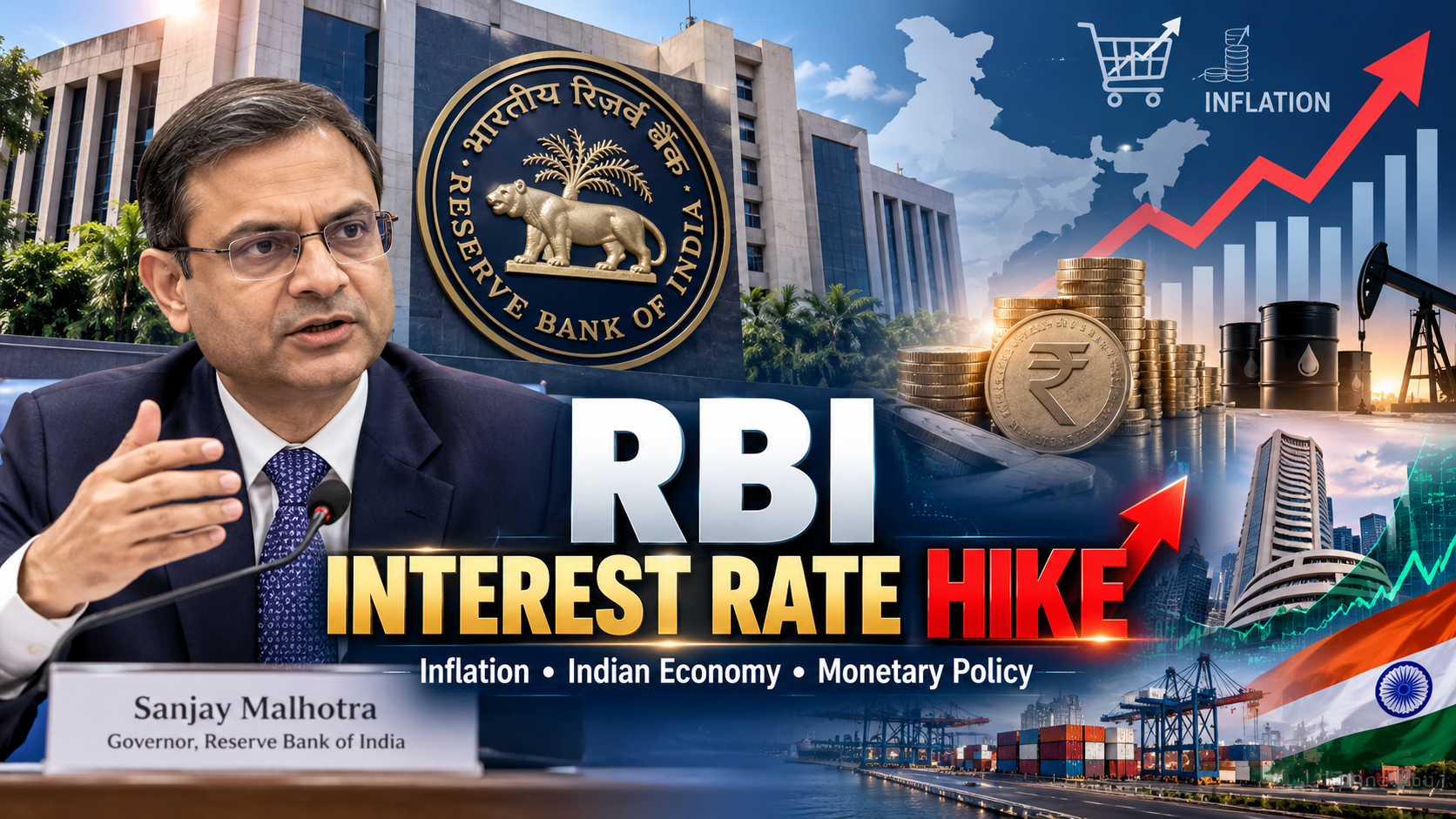
The Reserve Bank of India (RBI) Monetary Policy Statement on 7 October 2026 delivered a decision most markets expected: a 25 basis point increase in the repo rate to 5.50 percent, the first rise since February 2023. What the market had not fully priced was the tone around it. Governor Sanjay Malhotra’s remarks, as reported through the day, contained several signals about how the central bank sees the economy and what it intends to do next.
This article, written in original language from the published details of the announcement and press coverage, sorts those signals into six themes and explains what each means for the economy, equities and policy. The speech itself could not be accessed in full, so the points below reflect what was reported, not a transcript.
Signal one: the door to cuts has closed
The most consequential message was about direction. The Governor indicated that rate cuts are off the table for now, and that the next move can only be a hike or a pause, depending on how growth and inflation evolve.
That is a sharp contrast with 2025, when the RBI lowered rates by 125 basis points and its language leaned toward supporting growth. Removing cuts from the menu changes how bond traders price the curve and how banks plan their lending and deposit rates. It also shortens the list of scenarios for borrowers: the realistic choices are now higher or unchanged, not lower.
Signal two: the price pressure is broadening
The statement stressed that inflation is no longer about one or two items. Food price increases have become more widespread, with notable rises in everyday goods such as sugar and onions. Combined with volatile oil prices and the risk of a deficient monsoon linked to strong El Niño conditions, the central bank sees several threats at once.
Broad-based inflation matters because it is harder to dismiss. Policymakers can usually ignore a price spike in one commodity as noise. When many categories move together, the signal becomes persistent, and expectations are more likely to shift. The formal forecast reflects that concern, with inflation projected at 5.2 percent for FY27, well above the 4 percent target.
Signal three: the hiking cycle is conditional
The Governor was careful about the road ahead. The length and size of any tightening, he indicated, will depend on underlying inflation, how widely price pressures spread, the second-round effects of supply shocks, and the state of demand.
That is the practical meaning of calibrated tightening. The committee has not committed to a fixed path. It has created a framework in which each decision responds to evidence. For investors, that means the December meeting is a live event. A cooling in crude oil or food prices could produce a pause, while persistent firmness would support another increase.
This conditional approach also protects the RBI from criticism that it is overreacting. If conditions improve, it can stop without having promised more.
Signal four: growth is strong, but not risk-free
Despite the tightening, the tone on growth was confident. The Governor described the economy as strong, with momentum broad-based, and pointed to infrastructure spending, a rebound in private capital expenditure and healthy credit flows as supports. The RBI projects GDP growth of 7.1 percent for FY27, with quarterly estimates of 7.2 percent, 6.9 percent and 6.8 percent for the second, third and fourth quarters.
Still, he flagged risks. A weak monsoon and strong El Niño conditions could hurt rabi output and rural demand, and global headwinds remain. India’s agricultural economy still shapes consumption, especially in rural areas, so a poor crop can affect both inflation and growth at the same time. That is the policy dilemma in miniature: the same shock that lifts food prices can also weaken demand.
Signal five: capital flows and global markets are unsettled
The Governor drew attention to the external side. Net foreign portfolio outflows reached 10.3 billion dollars through 5 October, while foreign direct investment inflows rose. Higher bond yields in advanced economies, a stronger dollar and tighter global financial conditions are keeping markets nervous.
This helps explain why the RBI could not wait. When global yields rise and the dollar strengthens, emerging markets face pressure on their currencies and portfolio flows. A central bank that holds rates low in such an environment risks seeing capital leave and the rupee weaken further, which in turn raises import costs and inflation. The rupee has traded in the mid-90s per dollar. Raising the repo rate narrows the yield gap with global markets and offers some protection against further outflows.
The contrast between portfolio outflows and rising direct investment is also worth noting. Direct investment reflects longer-term confidence in the economy, while portfolio money responds quickly to yield differentials. The mix suggests investors still believe in India’s growth story even as they reprice short-term risk.
Signal six: markets accepted the decision calmly
The immediate market reaction was measured. Reports during the session showed the Nifty trading above 22,650 and the Sensex recovering about 300 points from its day’s low, with bank shares rising after the announcement. That fits a decision the market had largely expected. The Nifty had closed near 22,556 two days earlier after an eight-week losing streak, so a good deal of caution was already in prices.
The sector picture will unfold over the coming months:
- Banks may benefit from improved lending yields, though funding costs and credit quality will determine the final effect.
- Housing, autos and consumer durables depend on financing and may see demand soften as EMIs rise.
- Non-bank lenders face higher borrowing costs and need to reprice quickly to protect margins.
- Exporters gain from a weaker rupee, which partly offsets the valuation pressure from higher rates.
- Defensive and cash-rich companies typically hold up better when credit becomes more expensive.
What the six signals add up to
Together, these messages describe a central bank that has moved from supporting growth to guarding price stability, while believing the economy is strong enough to handle it. The hike is small, but the stance change, the removal of cuts from the table and the focus on broadening inflation point to a regime shift.
For policymakers, the lesson is that monetary policy cannot carry the whole load. Fuel taxation, food supply management, buffer stocks and trade policy all influence how much inflation the RBI must fight. Better coordination reduces the amount of tightening required.
For investors, the practical takeaway is to pay closer attention to balance sheets and earnings visibility, and less to the hope of falling rates. For borrowers, it is a prompt to review floating-rate loans and consider part-prepayment. For savers, deposit rates are likely to edge higher.
What to watch next
Four indicators will shape the December decision: monthly consumer price inflation, especially its core and food components; crude oil prices; monsoon and rabi sowing data; and the pace of foreign portfolio flows alongside the rupee. If these ease, the RBI can pause. If they worsen, a second hike becomes likely.


Leave a Reply