
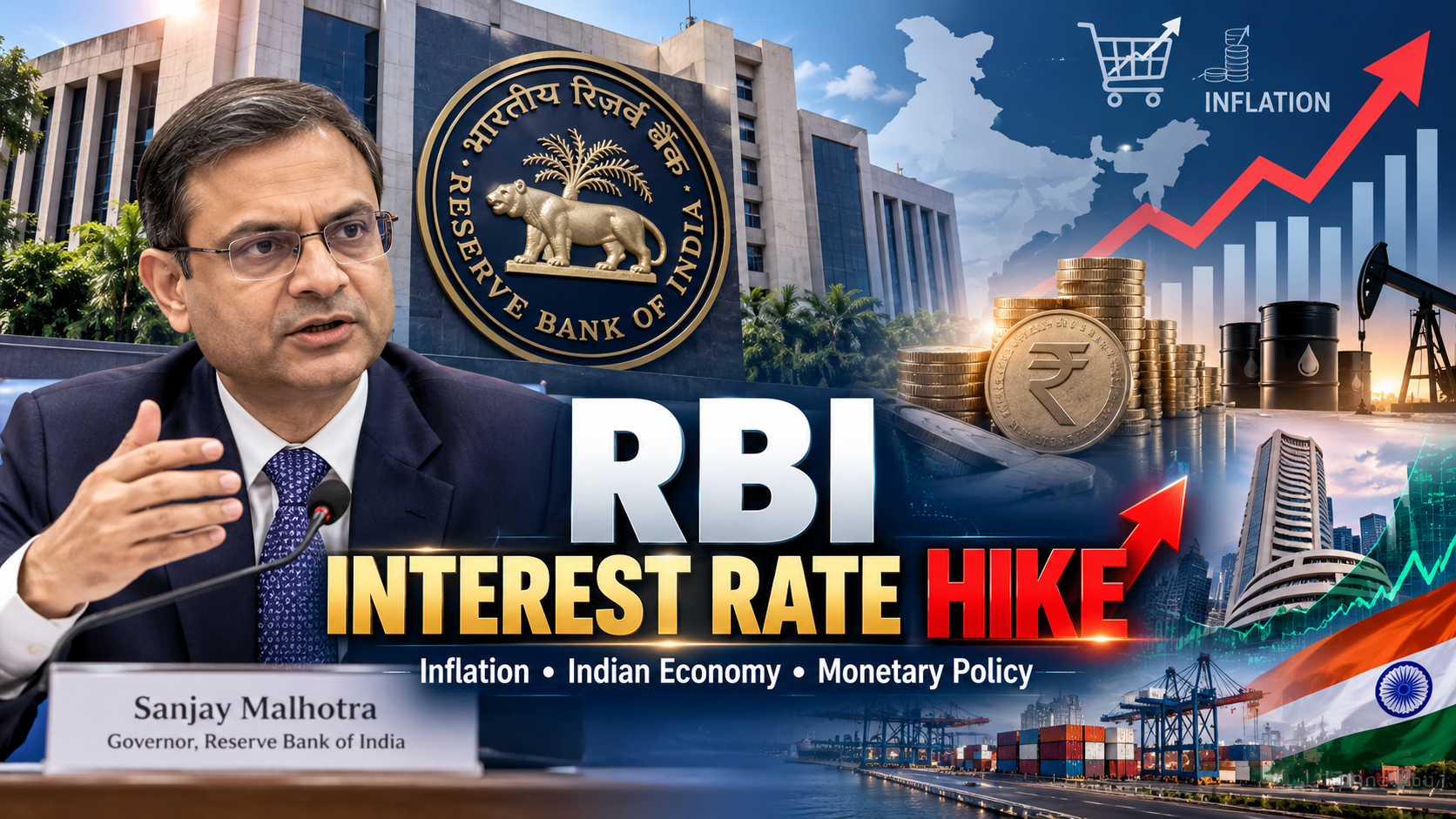
The Reserve Bank of India’s decision to transfer a record ₹2.87 lakh crore dividend to the Government of India has become one of the most significant economic developments of 2026. At first glance, the announcement appears to be a major fiscal relief for the government amid rising geopolitical uncertainty and global economic stress. However, beyond the headline number lies a deeper policy debate involving fiscal discipline, central bank autonomy, macroeconomic stability, and the long-term structure of India’s economic governance.
The dividend transfer comes at a time when India faces multiple external pressures. Rising crude oil prices due to instability in the Middle East, slowing global trade, currency volatility, and inflationary risks are increasing pressure on public finances. In such an environment, the RBI’s surplus transfer provides the government with substantial fiscal breathing space without immediately increasing market borrowings or taxes. From a short-term macroeconomic perspective, the move appears strategically beneficial.
One of the most immediate policy advantages of the dividend is its impact on the fiscal deficit. The Indian government has committed itself to maintaining fiscal consolidation while simultaneously expanding capital expenditure on infrastructure, manufacturing incentives, welfare schemes, and energy security. Normally, achieving all these objectives together becomes difficult during periods of external economic stress. A large central bank dividend helps bridge this gap by increasing non-tax revenue.
This additional revenue allows the government to maintain expenditure levels without significantly expanding debt issuance in the bond market. Lower borrowing requirements reduce pressure on government bond yields and may help stabilize interest rates across the economy. In a global environment where borrowing costs remain elevated, such fiscal flexibility becomes an important macroeconomic tool.
The timing of the dividend is also politically and economically significant. India is entering a period where energy security and inflation management have become central policy concerns. Since India imports the majority of its crude oil requirements, any geopolitical disruption directly affects domestic inflation, transportation costs, fertilizer subsidies, and the current account deficit. The RBI transfer effectively acts as a financial shock absorber, enabling the government to manage subsidy burdens and maintain economic stability without immediately cutting expenditure elsewhere.
However, the policy implications of this transfer are more complex than simple fiscal support. A key concern raised by economists involves the reduction in the RBI’s Contingent Risk Buffer. The risk buffer functions as the central bank’s financial safety reserve against currency volatility, global financial crises, bond market instability, or domestic banking stress. While the RBI maintains that the current buffer level remains within acceptable ranges, critics argue that repeated large surplus transfers could weaken the institution’s long-term financial resilience.
This concern is particularly relevant in today’s uncertain global economic environment. Central banks across the world are dealing with high inflation, volatile capital flows, and geopolitical fragmentation. In such conditions, maintaining strong balance sheets becomes essential for monetary authorities. If central banks transfer excessive surpluses to governments during favorable years, they may face reduced policy flexibility during future crises.
The broader policy debate therefore revolves around the balance between fiscal needs and central bank independence. Central banks are not ordinary revenue-generating institutions. Their primary responsibility is to maintain monetary stability, financial system confidence, and inflation control. When governments increasingly depend on central bank surpluses to support fiscal policy, the distinction between monetary and fiscal functions can begin to blur.
India has witnessed this debate before, particularly during discussions surrounding the Bimal Jalan Committee framework for RBI surplus distribution. The framework attempted to create institutional clarity regarding how much capital the RBI should retain and how much can be safely transferred to the government. While the current dividend technically operates within that framework, the sheer scale of the payout inevitably raises questions about whether fiscal dependence on RBI transfers is becoming structurally normalized.
Another important policy dimension involves federal fiscal relations. Since RBI dividends are categorized as non-tax revenue, state governments do not automatically receive proportional allocations under Finance Commission devolution formulas. This creates an imbalance where the central government receives extraordinary fiscal benefits while states facing similar inflationary and welfare pressures receive limited direct support. As state expenditure responsibilities continue to expand in sectors such as healthcare, education, agriculture, and social welfare, debates regarding equitable fiscal distribution may intensify.
At the same time, supporters of the transfer argue that the RBI’s strong earnings justify the payout. The central bank benefited from high returns on foreign exchange reserves, currency management operations, and interest income from government securities. In this view, withholding excessive capital despite robust earnings would unnecessarily limit productive fiscal spending during a period of economic uncertainty.
This argument reflects a broader global trend where governments increasingly rely on coordinated fiscal-monetary responses during crises. Following the COVID-19 pandemic, many advanced and emerging economies blurred traditional boundaries between fiscal and monetary policy to stabilize growth and financial systems. India’s current situation reflects a similar dynamic where institutional coordination is viewed as necessary to maintain economic resilience amid external shocks.
The market response to the RBI dividend also highlights its short-term policy effectiveness. Equity markets reacted positively due to expectations of improved liquidity and reduced fiscal pressure. Bond markets viewed the transfer favorably because it potentially lowers future government borrowing requirements. International investors may also interpret the dividend as evidence of India’s macroeconomic stability relative to other emerging economies facing greater fiscal stress.
Yet long-term sustainability remains the critical policy question. If governments begin incorporating exceptionally large RBI dividends into regular fiscal planning, future budgets may become vulnerable to fluctuations in central bank earnings. Unlike tax revenues, central bank surpluses are inherently variable and influenced by global financial conditions, currency markets, and interest rate cycles. Dependence on unpredictable transfers can create structural fiscal uncertainty over time.
Ultimately, the RBI’s record dividend represents both an opportunity and a warning. It provides the Indian government with valuable fiscal flexibility during a period of global instability and strengthens short-term economic confidence. At the same time, it raises important questions about institutional balance, fiscal discipline, and the evolving relationship between monetary and fiscal authorities in India.
The success of this policy decision will therefore depend not only on the size of the transfer, but on how responsibly the additional fiscal space is utilized. If directed toward productive investment, infrastructure, energy security, and economic stabilization, the dividend could strengthen India’s long-term growth trajectory. But if it encourages excessive fiscal dependence on central bank resources, it may create new institutional and macroeconomic vulnerabilities in the future.



Leave a Reply