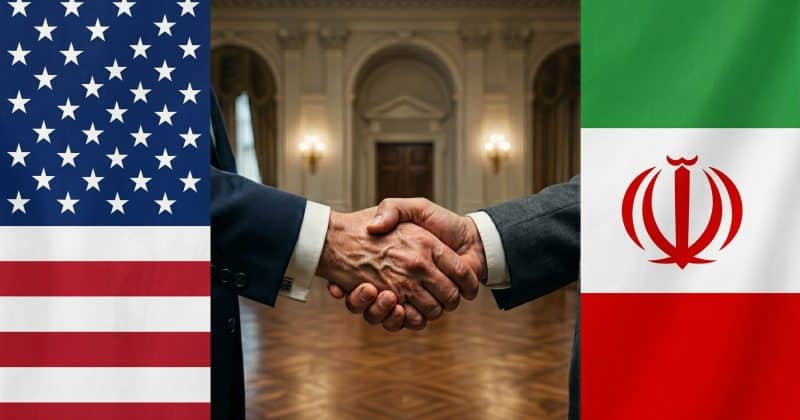
The Geneva Signing Brings the World to the Edge of History
After 109 days of war, a closed Strait of Hormuz, a global energy shock, and sustained back-channel diplomacy across multiple capitals, the United States and Iran have digitally signed a Memorandum of Understanding (MoU) to end hostilities — with the formal ceremony scheduled for Friday, June 20, in Geneva, Switzerland. The deal, brokered through regional intermediaries, represents one of the most consequential geopolitical events of the decade. But with Israel still an unpredictable variable and Hezbollah refusing to accept ceasefire terms in Lebanon, the word “peace” carries enormous asterisks.
The Geneva Moment: Digital Signatures, Historical Weight
Vice President JD Vance’s digital signature is already affixed to the MoU. Iran’s deputy foreign minister, Kazem Gharibabadi, confirmed that the text has been fully finalized, stating: “A permanent and immediate end to the war has been declared on all fronts.” The formal in-person signing on June 20 will take place in Geneva, with key regional intermediaries having played central mediation and back-channel roles in bridging the two adversaries.
Both US and Iranian delegations are expected to be present. VP Vance confirmed the US will send “a full spectrum of representatives,” while the Iranian side is expected to include parliamentary speaker Mohammad Baqer Ghalibaf and Foreign Minister Abbas Araghchi, alongside senior security officials. President Trump, currently attending the G7 summit in Évian-les-Bains, France, could travel to Geneva directly. Special Envoy Steve Witkoff, who led much of the US negotiating track, is also a likely participant.
Trump marked the occasion with characteristic drama on Truth Social: “The Deal with the Islamic Republic of Iran is now complete. Congratulations to all! I hereby fully authorize the toll-free opening of the Strait of Hormuz and, simultaneously herewith, authorize the immediate removal of the United States Naval blockade. Ships of the World, start your engines. Let the oil flow!”
The 14-Point MoU: A Framework Dissected
Iran’s state-affiliated Mehr News Agency published the 14 core provisions of the draft, subsequently corroborated by Bloomberg and Al-Arabiya. The framework covers:
- Immediate and permanent ceasefire declared on all military fronts, explicitly including Lebanon.
- US non-interference in Iranian internal affairs, with formal respect for Iranian sovereignty.
- Lifting of the US naval blockade of the Strait of Hormuz within 30 days of signing.
- US troop withdrawal from Iranian proximity zones within 30 days.
- Removal of Iranian naval obstructions, restoring Persian Gulf traffic to pre-war levels within 30 days.
- Suspension of oil, petrochemical, and energy sanctions, effectively unlocking Iranian crude exports.
- Release of $24 billion in frozen Iranian assets — half disbursed before final negotiations begin.
- Iran’s formal reaffirmation of adherence to the Nuclear Non-Proliferation Treaty (NPT) and commitment to never produce nuclear weapons.
- Nuclear status quo freeze — Iran halts enrichment advancement while the US suspends further sanctions pressure.
- A $300 billion economic reconstruction and development fund to be structured with regional and international partners.
- Final talks scoped strictly to nuclear and sanctions issues — Iran’s ballistic missile program is explicitly excluded from the framework.
- A 60-day negotiation window, extendable by mutual consent.
- UN Security Council ratification required for any final agreement to attain binding legal status.
- A joint compliance oversight mechanism for monitoring commitments on both sides.
The $300 Billion Fund: Private Capital, Not Government Payout
The headline figure — a minimum $300 billion economic rehabilitation package — has ignited fierce political debate in Washington. The Trump administration was quick to define its nature. According to Reuters, the fund is structured as a private investment vehicle, not a reparations or reconstruction grant program. No government money or taxpayer funds are involved. Vice President Vance attributed its stewardship to the “Gulf Coast Coalition,” an emerging consortium drawing commitments from companies across the US, Gulf states, Asia, South America, and Africa.
Trump himself took to Truth Social to pre-empt the inevitable criticism, insisting that reports of the US paying Iran were “Fake News.” The political sensitivity is obvious — the 2015 JCPOA was savaged domestically precisely for providing economic relief to Tehran, and Trump has no intention of repeating that optics narrative.
From a macroeconomic standpoint, the fund’s credibility and conditionality matter more than its size. Iran holds the world’s second-largest natural gas reserves and fourth-largest proven oil reserves. Reintegrating it into global supply chains could add 1.5–2 million barrels per day of output within 18–24 months. For energy-import-dependent economies — India, Japan, the EU — this is a meaningful supply-side shock absorber. Brent crude fell to a three-month low of $80.91 following the digital signing, down from $82.13 the prior day, as markets priced in Hormuz reopening. However, the world’s largest tanker operator publicly cautioned against a premature “rush” into the strait, noting that physical operational risk persists regardless of political pledges.
The Federal Reserve is expected to hold rates steady this week amid 4.2% CPI inflation — the highest since April 2023 — with newly appointed Chair Kevin Warsh set to hold his debut press conference against this backdrop. If Hormuz reopens as scheduled on Friday, energy disinflation could begin feeding through to consumer prices within 45–60 days, potentially giving the Fed more flexibility to resume its easing cycle in Q3.
Policy Fault Lines
The MoU’s most glaring omission from Washington’s strategic perspective is Iran’s ballistic missile program. The 14-point framework contains no provisions addressing Iran’s missile capabilities — a red line that Israeli Prime Minister Benjamin Netanyahu has demanded must anchor any acceptable deal. This gap is not merely procedural; it is a structural vulnerability that could unravel implementation if Israel decides to act unilaterally on perceived threats.
The Trump administration frames the deal as a phased architecture — nuclear constraints and ceasefire first, with missiles and regional proxy arrangements addressed in the subsequent 60-day final negotiation window. Tehran, for its part, is betting that economic reconstruction financed by Gulf capital is more strategically durable than nuclear ambiguity. After 109 days of conflict that has severely degraded its proxy network and economy, Iran’s calculation is rational.
Israel and Lebanon: The Unresolved Variable
Lebanon remains the most volatile fault line in this emerging order. Israel has made categorically clear that it will not withdraw from southern Lebanon as part of the US-Iran deal, despite Iranian demands for full foreign troop pullout. An Israeli source confirmed to The Jerusalem Post that a White House senior official separately validated this position — an IDF withdrawal from Lebanon is not part of the deal.
Hours before the MoU was finalized, Netanyahu and Defense Minister Israel Katz ordered IDF strikes on Beirut’s Dahiyeh district in response to Hezbollah fire — drawing a public rebuke from Trump himself, who posted that “this morning’s attacks should not have happened, particularly on a special day when we are so close to a Peace Deal with Iran.”
Hezbollah formally rejected the ceasefire proposal agreed upon by Israel and Lebanon following US-led negotiations in Washington. Lebanese President Joseph Aoun described the talks as the “last chance” for a comprehensive truce, and the Lebanese Armed Forces have begun deploying in the south as part of the emerging framework. But without Hezbollah’s buy-in — and without Israeli cabinet ratification of a final Lebanon deal — the northern front remains a live wire. Israel has not yet taken a final decision on a comprehensive Lebanon ceasefire. A conditional ceasefire agreement signed between Israel and Lebanon in June does not cover Hezbollah’s independent military posture, and the group’s rejection leaves a critical gap.
The Macro Verdict
The Geneva signing, when it happens on Friday, will mark a geopolitical inflection point regardless of what follows. Strait of Hormuz normalization alone removes a structural risk premium that has elevated global shipping insurance, suppressed Gulf FDI, and kept energy traders in perpetual hedging posture. A $300 billion private capital mobilization into Iran — however conditional — would represent one of the largest emerging-market re-entry stories of the decade.
But the 60-day clock starts ticking on June 20. A missile program unaddressed, an Israeli actor operating outside the deal’s parameters, and a Hezbollah that has rejected ceasefire terms — these are not footnotes. They are the main story. The war may be pausing. Whether it is truly over will be determined not in Geneva, but in the streets of southern Lebanon and in the centrifuge halls of Natanz.
The world is watching Geneva on Friday. After 109 days of war, that is itself a form of progress.


Leave a Reply