
The International Monetary Fund has once again nudged down its growth expectations for India, even as the country continues to hold its place among the fastest-expanding major economies in the world. In its July 2026 World Economic Outlook Update, titled “Global Economy in Crosscurrents of War and Technology,” the Fund lowered India’s growth projection for the current fiscal year by a modest 0.1 percentage point, while raising the outlook for the following year by 0.2 percentage point. The revision arrives against the backdrop of a Middle East conflict that has kept energy markets on edge for months, followed by a tentative diplomatic breakthrough between Washington and Tehran that has begun to calm oil prices.
A Modest Cut, Not a Collapse
On a fiscal-year basis, the IMF now expects India to grow by 6.4 percent in the current cycle, easing further to what translates into a calendar-year pace, before climbing back toward 6.7 percent the following fiscal year. Converted to a calendar-year basis, the Fund pegs Indian growth at roughly 7.0 percent this year and 6.4 percent next year. Either way the message is consistent: India remains the standout performer among large economies, comfortably ahead of China, the United States, and the euro area, even as the global growth engine as a whole loses some steam.
That resilience is notable given the environment the IMF describes. The Fund’s global growth forecast was itself cut to 3.0 percent for the current year, down from an average of 3.5 percent recorded over the previous two years, before an expected rebound to 3.4 percent next year. India’s ability to keep expanding near 6.5-7 percent, even as the global average slows, reflects what the report identifies as the country’s strong domestic consumption and services momentum — factors that have partially insulated it from the twin shocks currently buffeting the world economy.
Two Forces Pulling in Opposite Directions
The IMF frames the current global moment as a tug-of-war between two powerful and opposing forces. The first is a negative supply shock stemming from conflict in the Middle East, which has disrupted energy flows and rattled commodity markets. The second is a positive demand shock generated by the accelerating global technology cycle, powered in large part by the rapid adoption of artificial intelligence tools and hardware.
Countries have been affected very differently depending on where they sit relative to these two forces. Energy exporters outside the conflict zone have gained from improved terms of trade. Economies deeply embedded in the AI hardware supply chain — the report singles out Taiwan, South Korea, Thailand, and Malaysia — have posted growth surprises far above expectations, even when they also happen to be energy importers exposed to the war. By contrast, economies that both import energy and sit outside the technology value chain, a group that includes many low-income nations, have seen their prospects deteriorate the most.
India occupies something of a middle position. It remains a large energy importer and is therefore exposed to higher oil and gas costs, but its sheer scale of domestic demand and its expanding services sector have so far cushioned it from the sharper downgrades applied to other commodity-importing emerging markets.
The Iran-US Ceasefire and Its Role in the Forecast
Much of the shift in the IMF’s assumptions traces back to developments around the Strait of Hormuz, the world’s most critical oil chokepoint. The Fund’s baseline now assumes that a reopening of the strait begins in mid-July 2026, with conditions gradually normalizing to something resembling the prewar state of affairs by March 2027. This assumption follows a period of ceasefires and a memorandum of understanding reached between Iran and the United States, which have helped pull commodity prices down from the peaks reached in April 2026.
Even with this de-escalation, energy costs remain elevated. The IMF’s petroleum price assumption for the year sits close to 89 dollars a barrel, roughly 9 percent above what had been assumed in its April forecast, before easing toward the high 70s the following year. Natural gas prices have also been revised upward. Crude oil costs are now projected to rise by roughly 32 percent this year compared with last, with knock-on effects for fertilizer and food prices as well.
For India, and for other large energy-importing economies, this matters directly. Higher landed costs for crude translate into pressure on the trade balance, the currency, and ultimately domestic inflation — even when a ceasefire prevents the worst-case scenario of a prolonged closure of the strait. The IMF’s own inflation projections capture this dynamic at the global level: headline inflation is now expected to rise from 4.1 percent last year to 4.7 percent this year, before easing back to 3.9 percent the year after, a clear break from the disinflation trend that had been underway since early 2024.

Why the Region Around India Tells a Mixed Story
The unevenness of the shock is visible across India’s broader neighborhood. The Middle East and Central Asia region as a whole is projected to see growth collapse to just 0.7 percent this year, a sharp downward revision, before rebounding strongly above 6 percent the following year once the strait normalizes and energy output recovers. Meanwhile, economies further along the technology value chain — Vietnam, Thailand, and Malaysia among them — have actually seen their growth forecasts revised upward, buoyed by robust technology-related exports and data-center-driven investment.
India does not sit squarely in either extreme camp. It is neither a Gulf oil producer whose fortunes are tied directly to the war, nor is it primarily an AI-hardware exporter riding the technology boom the way parts of East Asia are. Its growth story remains driven chiefly by internal engines — consumption, services, and investment — which explains why the forecast revision for India is comparatively small next to the far larger swings seen in the Middle East or in AI-exporting economies.
More Data Points from the Report
A few additional figures from the update help put India’s position in sharper perspective:
- World trade: Global trade volume growth is projected to slow sharply from 5.0 percent last year to 3.5 percent this year, before recovering to 4.3 percent the following year — a pattern the Fund attributes to earlier front-loading of shipments, tariff drag, and the gradual rewiring of supply chains toward technology-related flows.
- China: Asia’s other giant economy is expected to slow to 4.6 percent growth this year, weighed down by higher oil costs and structural headwinds, even after an unexpectedly strong first quarter driven by infrastructure spending and high-tech manufacturing exports.
- United States: Growth is projected at 2.3 percent this year and 2.2 percent the next, largely unchanged from the Fund’s April estimate, supported by business investment in equipment and technology and by accommodative financial conditions.
- Euro area: Growth is put at just 0.9 percent this year, revised down slightly, hurt by a weak first quarter, elevated energy costs, and soft consumer confidence.
- Commodities: Beyond crude oil, the IMF expects fertilizer prices to climb by roughly 26 percent and food prices by about 8 percent this year, a combination that typically hits lower-income households hardest and adds to the case for closely monitoring food and energy subsidies in large importing economies like India.
- Financial conditions: Global financial conditions have eased since their early-April peak and remain accommodative by historical standards, with corporate earnings staying resilient — over 80 percent of S&P 500 firms beat earnings estimates in the first quarter — even as markets price in higher policy rates in response to renewed inflation pressure.
- Emerging market and developing economies as a group: growth is projected to slow to 3.8 percent this year before recovering to 4.5 percent next year, with India remaining well above this average throughout the forecast window.
What Lies Ahead for India
Looking beyond the immediate forecast window, several threads from the report point to where India’s growth trajectory could head next:
- Inflation path: With global oil assumptions still running roughly 9 percent above the Fund’s April baseline, India’s import bill and currency will stay sensitive to how quickly the Strait of Hormuz genuinely normalizes. The report’s assumption of a full return to prewar conditions only by March 2027 suggests energy-cost pressure could linger well into the next fiscal year.
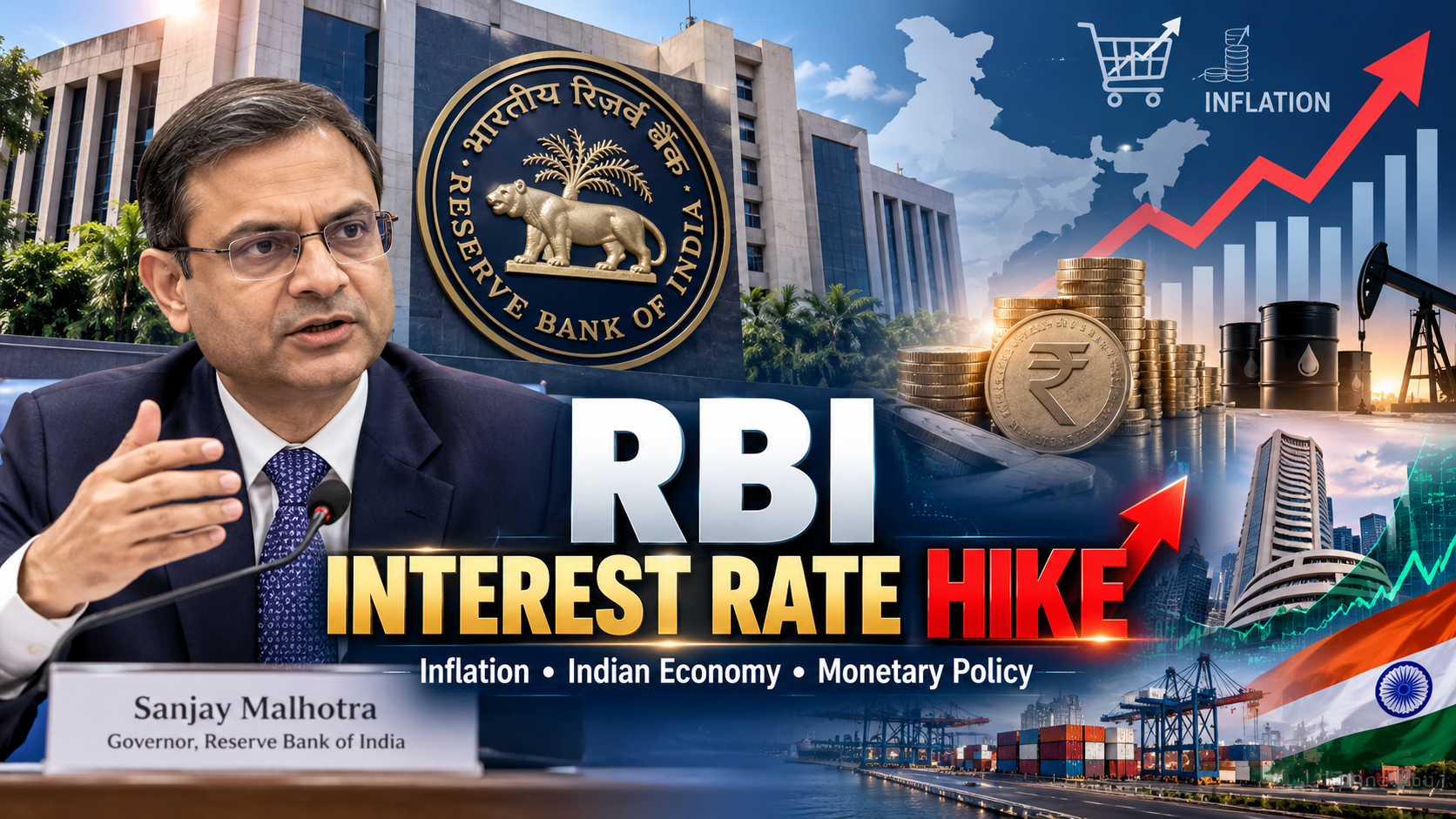
- Monetary policy stance: The IMF’s broader guidance — that central banks facing temporary but visible inflation pressure should hold real rates broadly steady, tightening further only if price pressures look persistent — offers a template that is directly relevant for India’s central bank as it weighs the trade-off between supporting growth and containing imported inflation.
- Fiscal space: The Fund repeatedly cautions against broad, poorly targeted subsidies and price controls in response to energy shocks, urging instead narrow, temporary, and well-sunsetted support for vulnerable households. This is a relevant marker for how India calibrates any fuel or fertilizer relief measures going forward.
- Structural reform dividend: The report explicitly flags that the benefits of AI and digitalization will be captured more fully by economies that invest in skills, energy infrastructure, and digital infrastructure. For India, this reinforces the importance of continued investment in electricity capacity, broadband penetration, and workforce reskilling to convert the ongoing technology cycle into a larger and more durable growth dividend rather than remaining a bystander to the AI-hardware boom concentrated in East Asia.
- External buffer: Because India is not among the group of countries with the deepest exposure to Gulf energy routes or the steepest downgrades in the report, it is comparatively well placed to absorb a moderate shock — but the Fund’s own risk section warns that a re-escalation in the Middle East, a sharper-than-assumed correction in AI-related asset valuations, or renewed trade fragmentation could all still narrow that cushion quickly.
Where the Global Economy Goes From Here
For the world economy more broadly, the report’s forward-looking signals point to a still-fragile balancing act:
- Baseline path: Global growth is expected to trough at 3.0 percent this year and recover only partially to 3.4 percent next year — still below the 3.5 percent average pace seen over the prior two years, implying the world economy is unlikely to fully regain its earlier momentum within the current forecast horizon.
- Two-sided technology risk: The Fund stresses that the AI-driven investment boom, currently a source of upside surprise, could just as easily reverse if profitability expectations are revised downward, potentially triggering a sharp correction in richly valued technology stocks and spilling over into weaker consumption and tighter financial conditions well beyond the tech sector itself.
- Geopolitical wildcard: Even with the Iran-US ceasefire, the report treats renewed Middle East conflict as the most immediate downside risk to the entire global outlook, given its ability to reignite commodity volatility, supply-chain strain, and inflationary pressure simultaneously.
- Policy priorities: The IMF’s central policy message for the period ahead is to rebuild depleted fiscal buffers, preserve central bank independence, and pursue structural reforms — energy security, AI readiness, and domestic rebalancing among them — so that economies are better positioned to absorb whichever shock materializes next, rather than relying on the current uneasy calm to hold indefinitely.
Risks That Could Still Alter the Picture
The IMF is careful to note that risks to its outlook remain tilted to the downside, even though they are somewhat more balanced than they appeared in April. A renewed flare-up in the Middle East could reignite volatility in oil markets, disrupt supply chains further, and force a reassessment of the ceasefire assumptions currently baked into the forecast. Trade fragmentation, a possible correction in frothy technology-related asset valuations, and eroded fiscal buffers across several economies are also flagged as sources of vulnerability that could amplify any fresh shock.
For India specifically, the durability of the Iran-US understanding, and the pace at which Strait of Hormuz traffic actually normalizes, will be key variables to watch. A smoother-than-expected de-escalation could ease import costs faster than currently assumed and support an upside surprise to growth, while any relapse into conflict would likely feed through into higher energy import bills, currency pressure, and tighter room for both fiscal and monetary policy.
The IMF’s latest update leaves India’s growth story largely intact rather than upending it. A small downward revision for the near term is more than offset by an upgrade for the following year, and India continues to outpace essentially every other major economy tracked in the report. The bigger takeaway is structural: India’s growth path is now being shaped less by domestic factors alone and increasingly by how two global crosscurrents — a Middle East war moving toward an uneasy ceasefire, and an AI-driven technology boom reshaping trade and investment flows — ultimately resolve over the coming year.


Leave a Reply