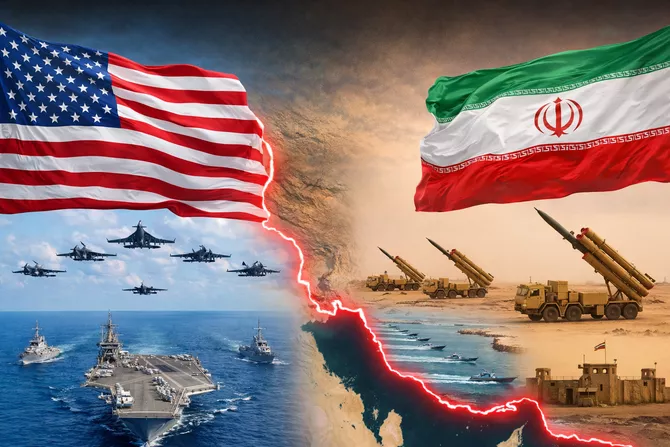
The announcement of a two-week ceasefire between the United States, Israel, and Iran marks a critical juncture in one of the most dangerous geopolitical confrontations of the 21st century. While global headlines frame the development as a step toward de-escalation, the reality is far more complex. The ceasefire is not a peace agreement—it is a temporary pause shaped by military pressure, economic disruption, and political necessity.
From Escalation to Brinkmanship
The conflict escalated dramatically after coordinated U.S.–Israeli strikes on Iranian targets in late February 2026, part of a broader effort to curb Iran’s nuclear and missile capabilities. Iran responded with missile and drone attacks targeting Israel, U.S. bases, and regional infrastructure, rapidly transforming the confrontation into a multi-front regional war.
By early April, tensions had reached a breaking point. U.S. President Donald Trump issued a stark ultimatum: Iran must reopen the Strait of Hormuz or face devastating attacks on its infrastructure. Just hours before the deadline—and with U.S. bombers reportedly already mobilized—a diplomatic breakthrough emerged.
The result was a two-week “double-sided ceasefire,” halting major hostilities and creating a narrow window for negotiations.
Key Terms of the Ceasefire
The ceasefire agreement rests on several core conditions:
- A two-week suspension of major military operations
- Reopening of the Strait of Hormuz, a critical global energy chokepoint
- Commitment to negotiations, likely based on Iran’s 10-point proposal
- Conditional participation by Israel, with operations in Lebanon excluded
Iran agreed to allow safe maritime passage through Hormuz, a vital route for nearly 20% of global oil supply. In return, the United States paused planned large-scale strikes, including attacks on key infrastructure.
However, the ceasefire remains conditional and fragile. Iran has emphasized that it does not signal the end of the war, but merely a temporary halt contingent on mutual compliance.
Pakistan’s Mediation: Crucial but Contested
A central factor in securing the ceasefire was Pakistan’s last-minute diplomatic intervention. Islamabad proposed a framework—often referred to as the “Islamabad Accord”—which helped bridge communication between Washington and Tehran.
Pakistan’s leadership, including Prime Minister Shehbaz Sharif and military officials, played a key role in delaying U.S. escalation and facilitating negotiations.
Yet, this mediation is not without controversy. Critics argue that Pakistan’s role reflects strategic opportunism as much as peacemaking. By inserting itself into a high-stakes global conflict, Islamabad has reasserted its geopolitical relevance—but without necessarily addressing the deeper structural causes of the war.
Economic Shockwaves and Energy Markets
The war’s economic consequences have been immediate and far-reaching. The temporary closure of the Strait of Hormuz triggered a surge in global oil prices and heightened volatility across financial markets.
Following the ceasefire announcement, oil prices dropped sharply and global markets rebounded, reflecting cautious optimism. However, energy analysts warn that supply disruptions, infrastructure damage, and geopolitical uncertainty will continue to weigh on markets.
The Middle East’s central role in global energy supply means that even a temporary disruption can have cascading effects on inflation, trade, and economic stability worldwide.
Strategic Realities Behind the Ceasefire
Despite the optics of diplomacy, the ceasefire was driven less by military outcomes and more by strategic constraints.
For the United States, the war posed growing risks: rising costs, domestic political pressure, and the danger of deeper regional entanglement. Trump’s decision to step back from escalation reflects the limits of sustained military engagement without clear political support.
For Iran, the ceasefire preserves critical leverage—particularly its ability to influence global oil flows through the Strait of Hormuz. Tehran has made no fundamental concessions on its nuclear program or regional strategy.
Israel, while supporting the ceasefire, has maintained operational flexibility, especially in Lebanon, underscoring the fragmented and incomplete nature of the agreement.
Unresolved Issues and Persistent Risks
The ceasefire leaves several core issues unresolved:
- Iran’s nuclear program, with inspections yet to resume
- Sanctions and economic relief, a key Iranian demand
- Regional proxy conflicts, including Hezbollah and Iraqi militias
- Durability of the ceasefire, given ongoing tensions
Even as the agreement took effect, reports of continued localized strikes and military alerts highlighted its fragility.
A Pause, Not Peace
The USA–Israel–Iran ceasefire represents a moment of de-escalation in an otherwise rapidly intensifying conflict. It has reduced immediate risks of a wider regional war and provided space for diplomacy. But it has not resolved the underlying drivers of the conflict.
Instead, the ceasefire reflects a convergence of pressures—military, economic, and political—that forced all sides to step back from the brink.
The next two weeks will be decisive. If negotiations in Islamabad yield progress, this pause could evolve into a broader settlement. If they fail, the ceasefire may be remembered not as a turning point toward peace, but as a brief intermission before an even more dangerous phase of conflict.
In geopolitical terms, the guns may have fallen silent—for now—but the logic of confrontation remains firmly in place.


Leave a Reply