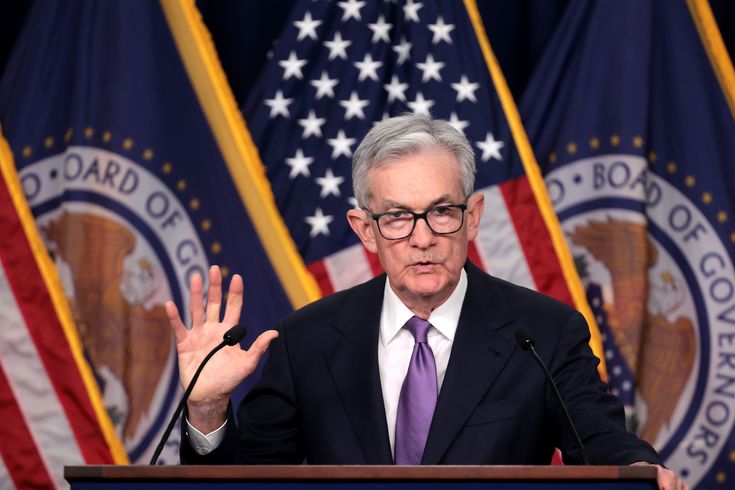
The latest Federal Reserve rate cut marks a significant shift in the US monetary policy landscape, sending ripples through global markets and shaping economic expectations for 2026. The Fed’s decision, announced on December 10, 2025, delivers a 25 basis point reduction in the federal funds target range to 3.50–3.75 percent, the lowest borrowing cost since 2022. This move, the third consecutive cut following reductions in September and October, reflects the central bank’s evolving assessment of cooling economic momentum, softening labor-market conditions, and a gradually improving inflation backdrop. While the cut was widely anticipated, the meeting revealed deep internal divisions, with three dissenting votes—the most since 2019—underscoring the complexity of the current macroeconomic environment.
Chair Jerome Powell emphasized in his press conference that future action will depend on incoming data, particularly as recent government shutdowns have created gaps and delays in key indicators. He acknowledged that inflation remains above the 2 percent target, yet the overall direction of price pressures is encouraging enough for policymakers to maintain their easing stance. The Fed’s broader message was one of caution: although additional rate cuts are possible in 2026, the central bank kept its projections unchanged, signalling only one more 25 bps cut next year. This restrained outlook reflects policymakers’ balancing act between managing persistently high service-sector inflation and responding to signs of weakening labor demand.
Historical Context of Fed Easing Cycle
The Fed initiated rate cuts in September 2025, trimming 25 bps to 4.00%-4.25% after holding steady through much of 2024 amid post-pandemic inflation. October’s follow-up cut to 3.75%-4.00% reflected downside employment risks outweighing inflation concerns, with unemployment ticking to 4.4% in September data. Divisions emerged within the FOMC, as two members dissented in October favoring no change due to elevated price pressures. President Donald Trump’s vocal calls for deeper cuts added external pressure, amplified by new appointee Stephen Miran advocating aggressive easing.
Federal Reserve Rate
 The Federal Reserve cut the federal funds rate by 25 bps to 3.5%–3.75% in December 2025, marking its third straight reduction and bringing borrowing costs to their lowest level since 2022. The move was widely expected but revealed deep internal divisions, with three dissenting votes—the most since 2019. Stephen Miran pushed for a sharper 50bps cut, citing slowing economic momentum, while Austan Goolsbee and Jeffrey Schmid argued for holding rates steady to avoid undermining progress on inflation.
Inflation Rate

US inflation in September 2025 inched up to 3%, driven mainly by a rebound in energy prices, especially gasoline and fuel oil. However, core inflation eased to 3%, signaling underlying price pressures continue to cool. Monthly CPI rose a moderate 0.3%, with gasoline contributing the most. Softening prices in food, used vehicles, and transportation services indicate broader disinflation trends. Overall, inflation remains slightly elevated but continues to move toward the Federal Reserve’s comfort zone, supporting a gradual policy-easing outlook.
The current easing cycle began in September 2025 when the Fed trimmed rates to 4.00–4.25 percent after maintaining a steady policy through much of 2024 and early 2025 as the economy navigated post-pandemic price imbalances. The October cut to 3.75–4.00 percent came amid rising concerns that the labor market was losing steam, with the unemployment rate reaching 4.4 percent in the latest data. Even then, differences within the FOMC became evident, as two members opposed the cut, arguing that inflation was still too elevated to justify easing. Political pressure further complicated the landscape, with President Donald Trump publicly urging the Fed to accelerate rate reductions. The appointment of Stephen Miran, who argued for a more aggressive 50 bps cut in December, added another layer to the debate within the committee.
Despite these tensions, the Fed’s economic projections paint a cautiously optimistic picture. The central bank upgraded its GDP growth estimate for 2025 to 1.7 percent and projected a stronger 2.3 percent expansion in 2026, suggesting that the US economy remains resilient despite tighter credit conditions. Inflation forecasts were nudged lower, with PCE inflation expected to settle at 2.9 percent this year before easing to 2.4 percent next year. Meanwhile, unemployment projections remain anchored around 4.5 percent for 2025 and 4.4 percent for 2026, pointing to a labor market that is softening but still fundamentally stable. Collectively, these metrics support the Fed’s evolving view that a soft landing is achievable, though not guaranteed.
The Fed’s confidence in cutting rates is reinforced by ongoing disinflation. US inflation in September 2025 rose marginally to 3 percent, largely driven by a rebound in energy prices such as gasoline and fuel oil. Yet underlying pressures continued to cool, with core inflation steady at 3 percent. A moderate monthly CPI rise of 0.3 percent, heavily influenced by energy, was offset by softening prices in food, used vehicles, and transportation services, indicating broad-based easing in price momentum. Taken together, these trends suggest that inflation is gradually returning toward the Fed’s comfort zone, enabling policymakers to provide incremental support to the economy without jeopardizing longer-term price stability.
The implications of the Fed’s shift are widely felt outside the United States, especially in emerging markets like India. The rate cut enhances rupee stability by encouraging foreign portfolio inflows into Indian equities and debt markets. With US yields falling, global investors find Indian assets more attractive, boosting liquidity and supporting the upward trajectory of the Nifty. For Indian exporters, the impact is mixed: stabilizing US demand offers relief after months of subdued activity, yet a stronger dollar may hinder competitiveness in sectors such as IT services, textiles, and engineering. Indian IT and pharmaceutical firms, however, stand to benefit as lower borrowing costs in the US reduce financing expenses for overseas expansions and acquisitions.
The effect on India’s import bill is also meaningful. A softer dollar, combined with improved hedging conditions, eases the pressure on oil and gold importers, helping moderate domestic inflation. This environment gives the Reserve Bank of India greater policy flexibility. With inflation trending toward its target range and the Fed turning dovish, the RBI gains room to consider rate reductions in 2026 without risking destabilizing capital outflows. Still, vigilance is warranted as global tariff changes, geopolitical uncertainties, and volatile energy markets could reintroduce inflationary risks.
Overall, the Fed’s December 2025 rate cut reinforces the narrative of a cautious but steady transition toward monetary easing. The US economy remains fundamentally strong, yet signs of labor-market cooling and moderating inflation justify a gradual reduction in borrowing costs. For India, the move provides a near-term cushion in terms of currency stability, capital flows, and policy autonomy. The road ahead remains uncertain, but for now, the shift in US monetary policy offers a more supportive backdrop for global markets and emerging economies alike.



Leave a Reply