
The President Donald Trump issued a stark ultimatum via Truth Social that signals a dramatic escalation in trade tensions between the United States and multiple European nations. The threat targets countries considering or implementing digital services taxes (DSTs)—levies specifically designed to tax large technology companies that generate revenue within a country without maintaining physical operations there.
The Direct Threat
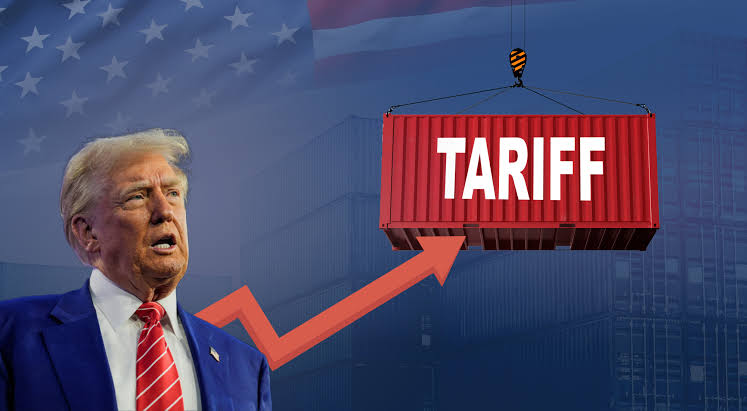
In his Truth Social post, Trump stated unequivocally: “Numerous European Countries have been discussing the imminent implementation of a Digital Services Tax on American Companies. Some of these Countries are close to actually doing this. Please let this statement serve to represent that any Country that imposes such a Tax will immediately be met with a 100% TARIFF on any and all Goods sent to the United States of America.”
The threat extends beyond standard tariff procedures. Trump emphasized that “This TARIFF will supersede Trade Deals made with the Country, whether implemented, signed, or not. Additionally, the 100% TARIFF will be immediately imposed, if they proceed.”
This language represents an unprecedented assertion of executive power over trade agreements, suggesting that Trump intends to bypass traditional Trade Representative negotiations and congressional approval processes, unilaterally overriding existing bilateral and multilateral trade pacts.
The European Context
The threat comes at a critical moment in U.S.-Europe trade relations. Multiple European nations have either implemented or are actively considering digital services taxes:
France has been the primary target of Trump’s ire. Since 2019, France has maintained a 3% tax on revenue from digital services earned by companies with revenues exceeding €25 million in France and €750 million globally. This tax disproportionately affects American technology giants including Google, Amazon, Apple, and Meta, which derive substantial revenues from European markets without significant local employment or corporate tax contributions.
Before Trump’s June 26 ultimatum, he had already threatened 100% tariffs specifically on French wine and champagne unless Paris eliminated its digital tax. French President Emmanuel Macron responded defiantly, declaring just hours before meeting Trump at the G7 summit that France would not bow to American pressure and would not scrap the tax.
The United Kingdom has also drawn Trump’s attention, with the president warning he would “probably put a big tariff” on UK imports if Britain maintained its own 2% digital services levy on American tech firms.
Other European nations including Spain, Italy, Austria, and others are actively discussing similar tax implementations, putting them potentially within the scope of Trump’s threat.
Timing and Trade Negotiation Dynamics
The threat emerges in an extraordinarily complex trade negotiation landscape. The Trump administration has set a July 4 deadline for finalizing a new U.S.-European Union trade agreement that would cap tariffs on most EU exports at 15%—a significant reduction from previous tariff threats and a point of celebration in Brussels just days before Trump’s ultimatum.
Critically, digital services taxes were explicitly excluded from that trade agreement, remaining a persistent sticking point between Washington and the European Union. Trump’s June 26 threat effectively reopens this negotiation, suggesting that the U.S. president views the 15% tariff cap as potentially insufficient leverage unless Europe abandons its digital tax agenda entirely.
Historical Precedent The Canada Precedent
Trump’s threat is not mere rhetoric. Last year, he vowed to cut off all trade talks with Canada over its proposed digital services tax. Facing the prospect of economic isolation and tariff retaliation, Ottawa capitulated and scrapped its digital tax shortly before it was set to take effect. This precedent demonstrates that Trump’s threats carry credible weight and have previously succeeded in coercing policy reversals.
Policy Rationale and Ideological Framework
From the Trump administration’s perspective, digital services taxes represent an unjust attack on American technological innovation and global competitiveness. The argument centers on the assertion that countries are unfairly targeting U.S. tech giants that have built dominant global platforms. Digital services taxes, Trump contends, are discriminatory measures designed to extract revenue from American companies without applying equivalent taxation to domestic digital firms.
This position conflicts sharply with the international policy consensus emerging through OECD-led negotiations on global corporate tax reform, particularly the Pillar 2 minimum global tax framework that aims to establish international standards for corporate taxation across borders.
Economic and Geopolitical Consequences
The threat creates several interconnected risks:
- Trade War Escalation: A 100% tariff would likely trigger retaliatory measures from the EU and individual European governments, potentially destabilizing the broader trading system and reverting to the escalatory tariff cycles of Trump’s first administration.
- Market Uncertainty: Stock markets, particularly technology stocks, face increased volatility given the threat to major European trading relationships and the potential for consumer price increases if tariffs are implemented.
- Alliance Fracture: The threat exacerbates transatlantic tensions at a moment when the U.S.-Europe relationship is already strained over defense spending, NATO commitments, and divergent approaches to China policy.
- Investor Confidence: Multinational corporations with European operations and supply chains face uncertainty regarding tariff implications and the long-term stability of trade frameworks.
Strategic Analysis
Trump’s ultimatum appears designed to achieve multiple objectives simultaneously: First, to prevent the implementation of digital services taxes that he views as discriminatory toward American firms; second, to reassert U.S. dominance over trade rule-making; and third, to create negotiating leverage ahead of the July 4 trade deadline.
However, the strategy carries significant risks. European policymakers, particularly in France and Germany, have demonstrated resistance to capitulating to American pressure on matters of domestic tax policy, viewing such taxes as legitimate expressions of national sovereignty.
Trump’s June 26 threat of 100% tariffs represents a significant escalation in the ongoing dispute over digital services taxation. Whether framed as defending American technological dominance or as protectionist measures that distort international commerce, the threat signals a fundamentally interventionist approach to global trade governance. As the July 4 trade deadline approaches, European capitals must weigh the economic consequences of tariff retaliation against their desire to implement independent tax policy—a choice that will significantly shape the contours of U.S.-Europe relations for years to come.


Leave a Reply