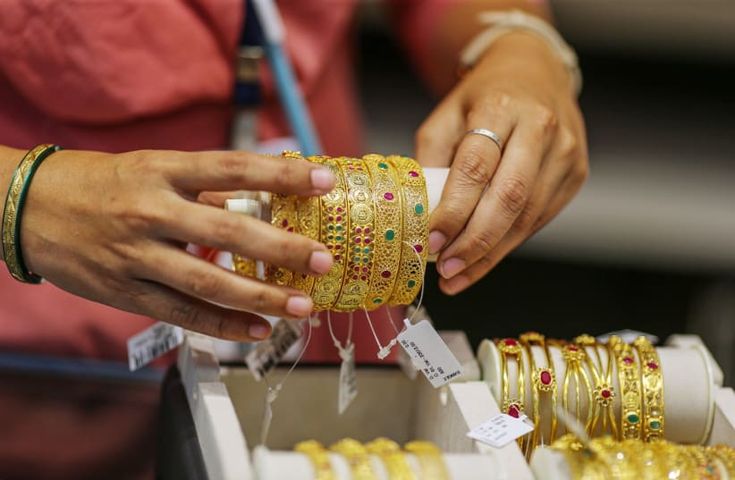
The India hikes gold and silver import duty to 15%, doubling the levy overnight to defend shrinking forex reserves, curb a record import bill, and stabilise its widening current account deficit.
In a sweeping policy reversal that sent shockwaves through India’s bullion markets and jewellery sector, the Finance Ministry on Wednesday raised import duties on gold and silver to 15% — more than doubling the previous rate of 6% as the government moves aggressively to arrest a widening trade deficit and stabilise fast-depleting foreign exchange reserves.
The new structure combines a 10% basic customs duty with a 5% Agriculture Infrastructure and Development Cess (AIDC), effective immediately. The announcement came just three days after Prime Minister Narendra Modi made an unusual public appeal urging Indians to refrain from buying gold for a full year — a rare intervention that had already rattled equity markets before formal policy action followed.
The Macro Pressure Behind the Decision
The timing of the hike is far from coincidental. India’s foreign exchange reserves have dropped sharply from an all-time high of $728.49 billion in late February 2026 to around $690 billion as of early May — a decline of nearly $38.5 billion in just ten weeks. A protracted US-Iran conflict has disrupted global oil supply chains, pushing Brent crude from around $73 per barrel to over $107 per barrel, with a peak of $126 per barrel recorded in late April. For India, which imports nearly 85% of its crude oil requirements and over 80% of its LPG through the Strait of Hormuz — effectively blockaded in the conflict — the strain on the current account has become acute.
Gold imports have compounded the problem. India recorded gold imports worth $71.98 billion in FY2025-26, a 24% surge from the prior year, even as volume shipments declined 4.76% to 721.03 tonnes. The spike in value reflects the extraordinary run in gold prices, which climbed from $76,617 per kilogram in FY25 to nearly $99,825 per kilogram in FY26. With gold accounting for over 9% of India’s total import bill, it has emerged as a central variable in the country’s deteriorating current account deficit, which the Reserve Bank of India projects could widen to 1.3% of GDP — up sharply from 0.8% in the prior fiscal year.
The overall trade deficit hit $333.2 billion in 2025-26, making the government’s intent to curb non-essential imports both understandable and urgent.
A Policy U-Turn with Historical Echoes
The decision is a full reversal of the duty cut introduced in the Union Budget of 2024-25, when the government slashed gold import taxes from 15% to 6% to boost the gems and jewellery sector and bring down rampant smuggling. That decision had yielded tangible dividends: grey market activity receded, formal imports rose, and the industry expanded. Wednesday’s move undoes that progress in its entirety.
The parallel with the FY2012-13 cycle is difficult to ignore. During that period, the government introduced a series of escalating restrictions on gold imports to address a then-spiralling current account deficit, culminating in the controversial 80:20 scheme that tied import volumes to re-export obligations. Analysts at Jefferies noted that PM Modi’s appeal this week carried the same policy messaging as that earlier episode, suggesting that the current intervention could be part of a broader, phased response rather than a one-off adjustment.
In 2022, India had similarly raised gold import duty to 15% in response to the rupee’s depreciation following the Russia-Ukraine war, before the subsequent rollback in 2024.
Market Reaction: Futures Surge, Jewellery Stocks Bleed
Financial markets reacted instantly. Domestic gold futures surged 7.2% to ₹1,64,497 per 10 grams on Wednesday morning. Spot gold in Chennai jumped to ₹15,400 per gram from ₹14,100 per gram just two days earlier — a rise of ₹1,300 per gram in 48 hours. Silver prices also climbed sharply.
Jewellery stocks bore the brunt. Kalyan Jewellers India fell nearly 6%, Thangamayil Jewellery dropped over 3%, and Titan Company — whose flagship Tanishq brand dominates the organised jewellery retail segment — traded flat with a negative bias. Senco Gold, PN Gadgil Jewellers, and smaller regional jewellery chains all saw selling pressure. Analysts expect near-term demand for discretionary jewellery purchases to contract significantly, though larger organised players may gain market share over unorganised rivals in the medium term as margins compress across the sector.
Demand Shock and the Smuggling Spectre
The industry response has been sharp. The All India Gems and Jewellery Council (GJC) warned that the duty hike threatens to inflict serious damage on a sector valued at approximately ₹5 lakh crore. The IBJA’s national secretary, Surendra Mehta, acknowledged the government’s fiscal rationale but cautioned that with gold prices already at elevated levels, the effective consumer cost could suppress demand significantly.
The most pointed concern, however, is the resurgence of organised smuggling. A Mumbai-based bullion dealer at a private bank cautioned that the grey market would likely reactivate, noting that at current gold prices, the profit incentive for illegal imports is substantial. This is not a hypothetical risk: the sharp reduction in smuggling observed after the 2024 duty cut was one of its most celebrated outcomes. A reversal of that trend would not only undermine revenue from legitimate imports but also erode the formal sector’s competitiveness.
Importantly, the hike also affects gold and silver imports from the UAE, which had previously benefited from lower concessional rates under a quota system tied to the India-UAE Comprehensive Economic Partnership Agreement (CEPA).
The Government’s Calculus
A Finance Ministry source indicated that the government consciously chose price-based disincentives over quantitative restrictions, preserving market flexibility while creating a fiscal buffer. The broader message, reinforced by the Prime Minister’s personal appeal, is that India is treating its external sector vulnerabilities with the same seriousness it reserves for inflation or fiscal consolidation targets.
For policymakers navigating a geopolitical oil shock, a weakening rupee, and a record-high import bill for a non-essential commodity, the logic is clear. Whether it holds — or instead accelerates the very grey-market activity it seeks to curb — will determine whether this becomes a policy success or a cautionary tale, much like the cycles that preceded it.
The rupee has been one of Asia’s worst-performing currencies in recent months. The coming weeks will test whether this intervention can stabilise the external account or whether India must reach for more structural levers.




Leave a Reply