
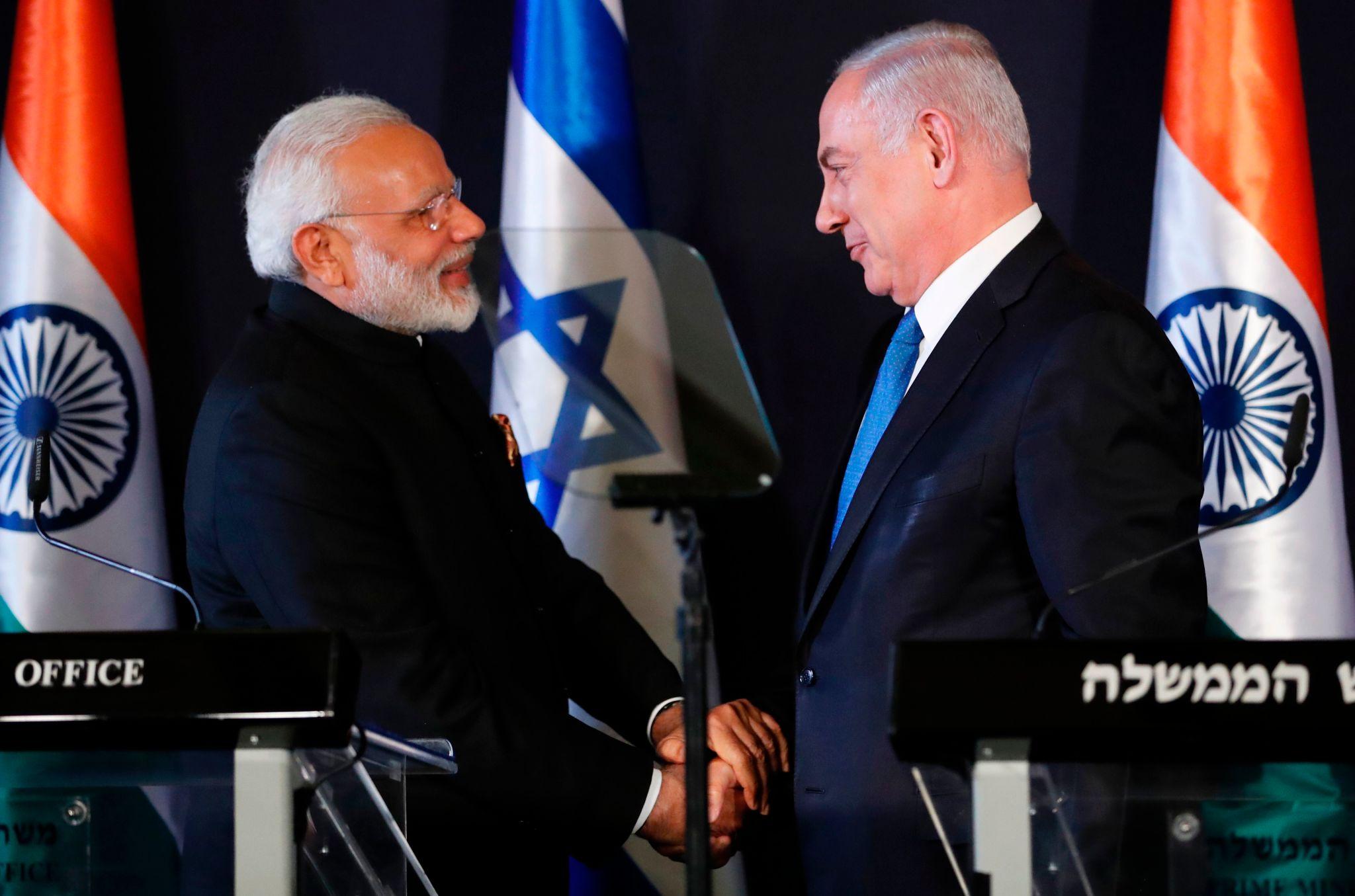
The year 2026 marks an important milestone in the evolving relationship between India and Israel. What began as a cautious diplomatic engagement in the early 1990s has now matured into a comprehensive strategic partnership rooted in trust, technology, and shared geopolitical interests. The recent high-level engagement between Prime Minister Narendra Modi and Prime Minister Benjamin Netanyahu reaffirmed the depth and direction of this growing alliance.
India and Israel formally established diplomatic relations in 1992. Since then, bilateral ties have expanded steadily across defence, agriculture, water management, trade, cybersecurity, and innovation. However, the last decade has seen a significant acceleration. Prime Minister Modi’s historic visit to Israel in 2017 broke long-standing diplomatic hesitation, and subsequent exchanges cemented what both countries now describe as a “Special Strategic Partnership.”
At the core of the 2026 partnership lies defence and security cooperation. Israel has been one of India’s key defence suppliers, providing advanced systems ranging from surveillance technologies to missile defence platforms. As India seeks to modernize its armed forces and strengthen border security, Israel’s technological edge complements India’s strategic requirements. Beyond procurement, the focus has increasingly shifted toward joint development and co-production under India’s “Make in India” initiative. This shift signals a deeper institutional alignment rather than a purely transactional defence relationship.
Technology and innovation form another major pillar of the partnership. Israel, often referred to as the “Start-Up Nation,” has built a global reputation for excellence in artificial intelligence, cybersecurity, semiconductor research, biotechnology, and water technology. India, with its vast digital infrastructure and expanding startup ecosystem, offers scale, talent, and market depth. The strengthening of joint research funds and industrial innovation platforms reflects a forward-looking approach. Collaborative ventures between universities, research institutions, and private firms are expected to drive breakthroughs in emerging technologies such as quantum computing and advanced manufacturing.
Economic ties are also gaining momentum. Bilateral trade, which was modest in the early years, has diversified significantly. Negotiations toward a Free Trade Agreement (FTA) indicate both countries’ intention to unlock further economic potential. An FTA could reduce tariffs, enhance market access, and facilitate investment flows in sectors such as pharmaceuticals, defence manufacturing, agriculture technology, and digital services. Financial connectivity discussions, including possible integration of payment systems, show how economic diplomacy is adapting to the digital age.
Agriculture and water management remain foundational areas of cooperation. Israel’s expertise in drip irrigation, desert farming, and wastewater recycling has already transformed agricultural practices in several Indian states. Centers of Excellence established across India demonstrate how technology transfer can directly improve farmer productivity and sustainability. In a climate-constrained world, such cooperation carries long-term strategic significance. Food security, water conservation, and climate resilience are no longer domestic concerns alone—they are shared global priorities.
People-to-people engagement has strengthened as well. Tourism, student exchanges, cultural collaborations, and growing business networks have created a more organic connection between societies. Indian professionals in sectors such as information technology and caregiving contribute to Israel’s workforce, while Israeli tourists and entrepreneurs increasingly engage with India’s diverse landscape and markets. This human dimension adds resilience to bilateral relations, making them less vulnerable to temporary political fluctuations.
Geopolitically, the partnership reflects a convergence of interests in a rapidly changing world order. Both countries face security challenges, including terrorism and regional instability. Both seek technological self-reliance while remaining integrated with global markets. Moreover, India’s expanding engagement in West Asia—balancing ties with Israel, Gulf nations, and others—demonstrates diplomatic maturity. Israel, for its part, values India as a stable, democratic partner with significant global influence.
The 2026 strategic partnership also signals broader trends in international relations. Traditional alliances based purely on ideology are giving way to pragmatic, interest-based cooperation. India and Israel, despite differences in geography and scale, have identified complementary strengths. Israel contributes cutting-edge innovation and defence capabilities; India contributes scale, skilled manpower, and a rapidly growing economy. Together, they represent a model of mid-sized and large democracies collaborating for mutual benefit.
Challenges remain. Regional tensions in West Asia, global supply chain disruptions, and shifting great-power dynamics could test the resilience of the partnership. Negotiating a balanced trade agreement requires careful calibration. Managing defence technology transfers while protecting intellectual property demands trust and regulatory clarity. Yet the trajectory appears positive, supported by strong political commitment on both sides.
In conclusion, the India–Israel Strategic Partnership 2026 represents more than a diplomatic milestone. It embodies a mature, multi-dimensional relationship grounded in security cooperation, technological innovation, economic collaboration, and shared strategic vision. As both nations navigate an uncertain global environment, their partnership stands as a testament to how pragmatic diplomacy and mutual respect can transform bilateral ties into a forward-looking strategic alliance.
Leave a Reply