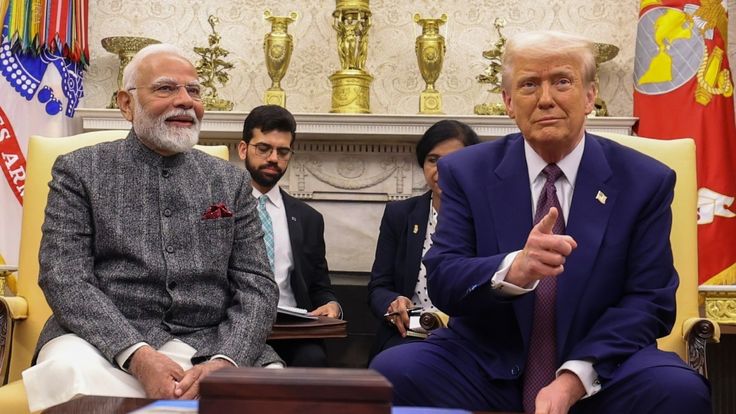
The India–USA trade relationship entered a decisive new phase in 2025–26 with Washington announcing a sharp rollback of punitive tariffs on Indian goods, bringing the effective rate down to around 18% from peak levels that had climbed close to 50%. The move marks a major de-escalation after months of trade tension and signals a shift from confrontation to conditional cooperation between India and the United States.
The USA imposed a 25% tariff on Indian goods along with an additional 25% penalty linked to Russian oil purchases, taking the total tariff to 50%. Under the new agreement, the tariff has been reduced from 25% to 18%, and the 25% penalty has been withdrawn, bringing the total tariff down to 18%.
For exporters, investors, and policymakers, the deal changes incentives across sectors, restores damaged supply chains, and embeds trade more deeply within broader geopolitical and energy negotiations.
From Tariff Shock to Partial Normalisation
The crisis began in mid-2025 when US President Donald Trump announced a blanket tariff hike on Indian imports. What started as a 25% levy soon escalated through additional penalties linked to India’s purchases of Russian oil and defence equipment. Within weeks, cumulative duties pushed the tariff burden on many Indian exports to nearly 50%, making them uncompetitive overnight in the US market.
The impact was immediate. India’s labour-intensive export sectors—textiles, apparel, gems and jewellery, auto components and light engineering—faced order cancellations and pricing pressure. Given that the US is India’s largest export destination for goods, with shipments worth roughly $80–90 billion annually, the shock raised fears of job losses and investment slowdown.
New Delhi responded cautiously. While keeping the option of WTO action and retaliatory tariffs open, it avoided a full-blown trade war and instead pushed for negotiations. The strategy aimed to de-risk economic ties without triggering a political rupture with Washington.
What the New Deal Does
By late 2025, negotiations yielded results. Under the new understanding, the US agreed to reduce average tariffs on Indian imports to around 18%—well below the punitive peak but still higher than pre-shock levels. The rollback restores basic price competitiveness for Indian goods while allowing Washington to retain leverage in sensitive areas.
The deal has three defining features:
First, it removes the most extreme tariff layers, offering immediate relief to exporters whose margins could not absorb a 50% duty. Second, it links tariff concessions to wider market-access commitments, including India’s openness to selected US agricultural, energy and technology products. Third, it ties trade benefits to geopolitical alignment, especially on energy sourcing and strategic cooperation.
In effect, tariffs are no longer just a trade instrument but part of a larger strategic bargain.
Winners Among Indian Exporters
The tariff cut to 18% is a meaningful gain for Indian exporters, particularly in sectors where global competition is intense and margins are thin.
Textiles and apparel stand out as key beneficiaries. Lower US tariffs narrow the cost gap with competitors such as Bangladesh and Vietnam, helping Indian firms regain orders that were at risk of being diverted.
Gems and jewellery, where India dominates cutting and polishing, also benefit from restored access to the US retail market. Normalised tariffs improve viability for higher-value exports that were hit hardest during the high-tariff phase.
Auto components and engineering goods gain from renewed integration into US supply chains. With tariffs reduced, American OEMs can once again treat India as a reliable sourcing base rather than a high-risk alternative.
However, relief is not universal. Steel and aluminium remain under a controlled regime combining tariffs, quotas and exemptions. Indian producers in these sectors still face uncertainty and must navigate complex approval processes to maintain US market access.
Costs and Adjustments at Home
The agreement is not one-sided. India has committed to greater openness for US exports, building on earlier steps taken in 2023 to lift retaliatory tariffs on American agricultural products.
Consumers are likely to benefit from lower prices and wider choice in certain imported goods, including premium food items, alcoholic beverages, motorcycles and select technology products. For urban consumers, this adds to competitive pressure that can improve quality and efficiency.
At the same time, domestic producers in sensitive sectors—notably parts of agriculture and niche manufacturing—face increased competition. This may prompt demands for phased liberalisation, safeguard duties or targeted government support.
From a fiscal perspective, lower tariffs may slightly reduce customs revenue, but the impact is expected to be manageable compared to the broader gains from stable export access and improved investor confidence.
Energy, Strategy and Policy Risk
A crucial, and more controversial, element of the deal is energy. India has signalled willingness to shift part of its crude oil imports from Russia to the US, aligning trade concessions with Washington’s geopolitical priorities. While this may strengthen strategic ties, it also raises concerns about energy costs and over-dependence on a narrower set of suppliers.
The episode underscores a larger reality: policy risk in global trade has risen sharply. The rapid move from near-normal tariffs to a 50% wall—and then back down to 18%—shows how quickly political decisions can overturn commercial assumptions.
The chart illustrates the sharp shifts in US tariff policy on Indian goods over the last two years.
-
Pre-2025: Before the trade dispute escalated, US tariffs on Indian exports were relatively low, averaging around 5%. During this phase, trade flows were stable and Indian exporters were competitive in the US market.
-
Mid-2025 (Peak): In mid-2025, the US imposed a series of punitive measures that pushed cumulative tariffs on Indian goods to nearly 25%+25%=50%. This represented the peak of trade tensions and severely disrupted Indian exports, especially in labour-intensive sectors such as textiles, gems and jewellery, and auto components.
-
2026 Deal: Following negotiations, the new India–US tariff agreement reduced average tariffs to about 18%. While still higher than pre-crisis levels, this reduction significantly restores export competitiveness and signals a shift from confrontation to conditional normalisation in bilateral trade relations.
Key Takeaway
The chart highlights how quickly trade policy can change due to political and strategic factors. For businesses and investors, it underscores the rising importance of policy risk and the need to diversify markets, even as the 18% tariff provides meaningful relief compared to the 2025 tariff shock.
Market and Strategic Takeaways
For Indian markets, the near-term outlook is moderately positive. Export-oriented sectors directly hit by the 2025 shock are likely to see earnings stabilise, while sentiment improves on reduced uncertainty.
Over the medium term, firms will need to diversify markets, hedge geopolitical risk and adapt to a world where trade, energy and security are negotiated together. For policymakers, the deal reinforces the importance of balancing strategic alignment with economic autonomy.
The India–USA tariff reset does not end trade tensions—but it marks a clear pivot from punitive confrontation to conditional normalisation, with the 18% tariff emerging as the new, politically charged baseline for one of the world’s most important bilateral trade relationships.




Leave a Reply